Civil, mass grading and mobilization
Establish perimeter fencing, vehicle and personnel gates, screening, camera sightlines, and temporary utility locations around haul routes, crane zones, drainage controls, and changing civil access.

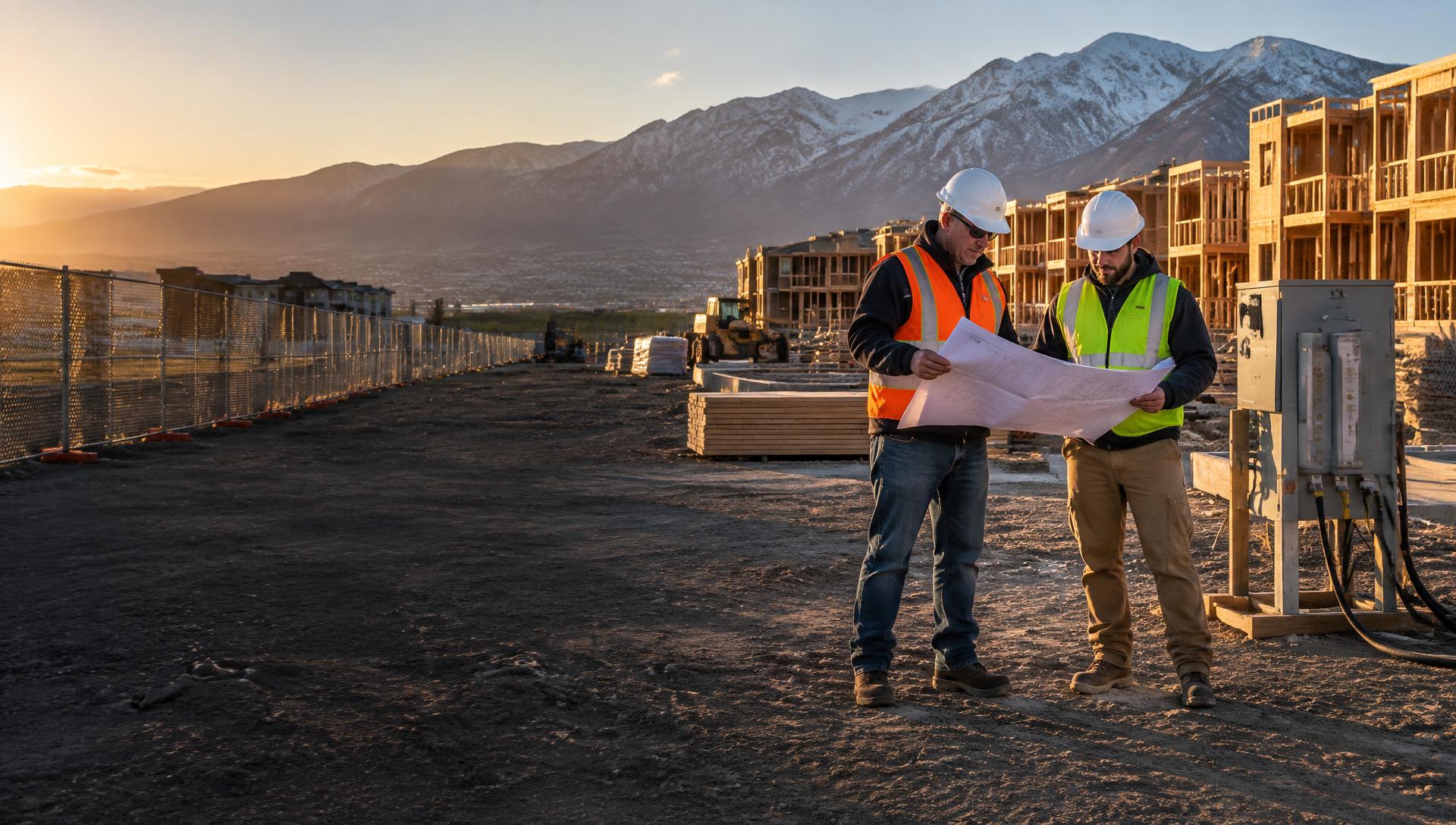
Commercial construction
A coordinated field plan for retail, industrial, office, institutional, and civil construction across Utah.
Phase-by-phase execution
The right configuration depends on the actual site, loads, jurisdiction, utility, access, and schedule. These phases provide a practical coordination framework.
Establish perimeter fencing, vehicle and personnel gates, screening, camera sightlines, and temporary utility locations around haul routes, crane zones, drainage controls, and changing civil access.
Build the load plan around cranes, pumps, welders, tools, site offices, and temporary lighting. Commercial systems may involve higher-capacity single-phase or three-phase distribution, while towable generators can bridge work before utility energization. Exact voltages, amperage, connections, and equipment are engineered and confirmed for the site.
Rebalance distribution for lifts, welding, temporary lighting, heaters, and enclosed work areas. Coordinate generator runtime and fueling access without blocking deliveries, fire lanes, or active trade paths.
Sequence permanent switchgear energization, temporary-load transitions, life-safety access, perimeter changes, and documented demobilization with the superintendent and electrical team.
Superintendent and PM checklist
Coordinated support
Planned power from site prep through construction.
Service detailsPractical perimeters, access points, and screening.
Service detailsJobsite visibility for the areas that matter.
Service detailsProject-based power support for the work at hand.
Service detailsFuel coordination that fits the jobsite plan.
Service detailsUtah market links
Planning questions
Commercial needs may range from standard 120/240V distribution to higher-capacity 200A, 400A or three-phase configurations. The available utility service, engineered load, equipment connections, jurisdiction, and project phase determine what is appropriate. TCS confirms the actual configuration before committing it to scope.
Dispatch depends on location, access, equipment availability, required capacity, and the safety of the requested work. Share the site and urgency with TCS for a current response window. Emergency and after-hours availability is confirmed case by case.
The plan considers tank capacity, measured consumption, operating schedule, delivery access, containment, and weather. Delivery frequency and any monitoring are confirmed for the project so refueling can be coordinated before a low-fuel condition.
Insurance documentation is available on request. Requirements to name a property owner or general contractor as an additional insured are reviewed against the project contract and applicable policy before confirmation.
Review practical jobsite guides before submitting project details.
Plan the next move
Share the project type, Utah location, timing, and services you are considering. Our team will review the details and follow up.