Salt Lake City, Utah
Temporary Power Poles and Construction Power in Salt Lake City, Utah
Salt Lake City work mixes downtown infill, multifamily, and commercial redevelopment on tight lots where sidewalks, alleys, and neighbors all sit close to the site.
Utah owned and operated
TCS is based in Murray and coordinates Salt Lake City projects with local crews.
Licensed and insured
Current licensing and insurance documentation is provided on request.
Utility and jurisdiction coordination
Requirements are confirmed with the serving electric utility and local inspectors.
Active construction support
Service is coordinated as phases, access, and site needs change.
Power pole setup
How temporary power works on Salt Lake City jobsites
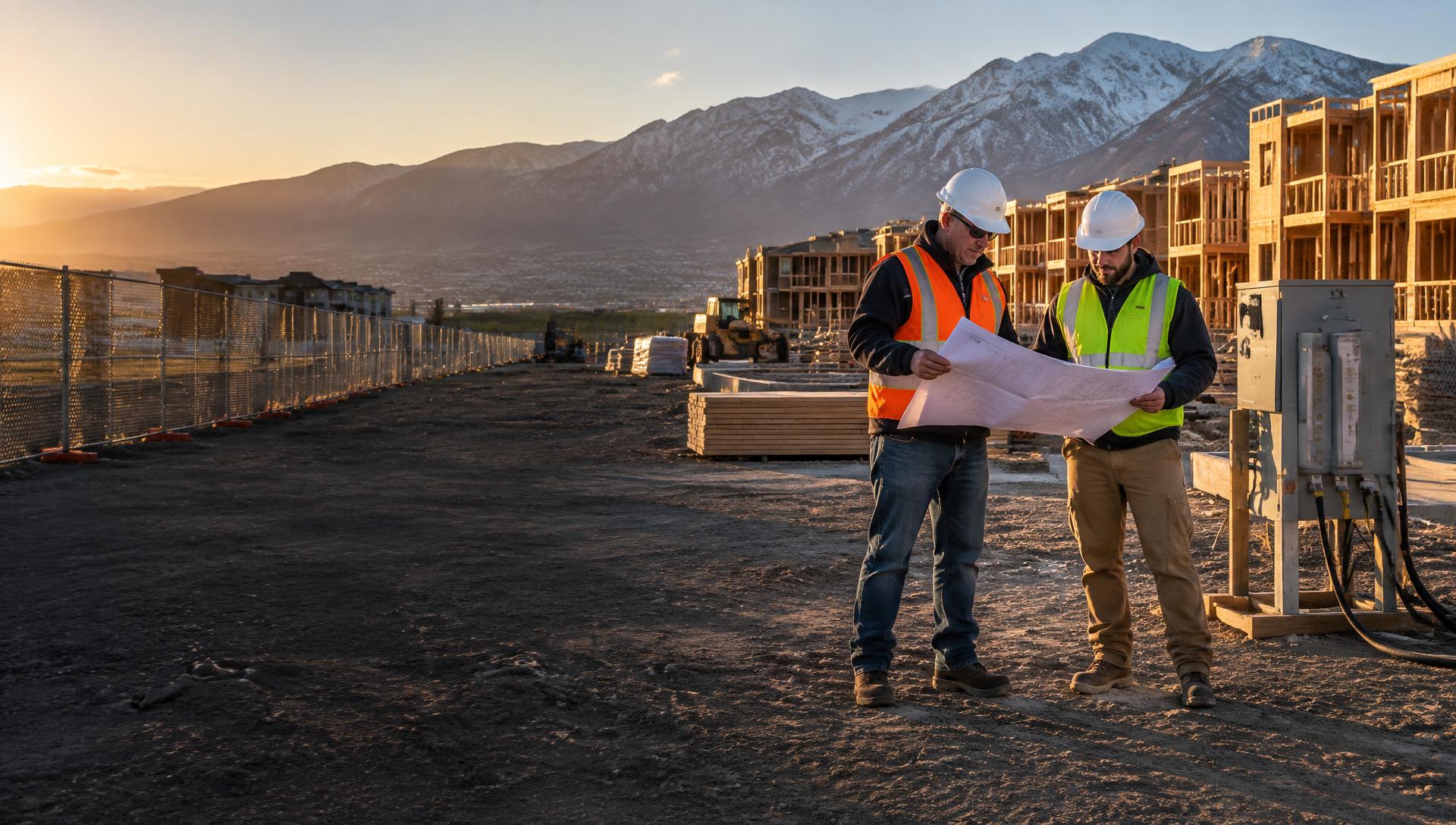
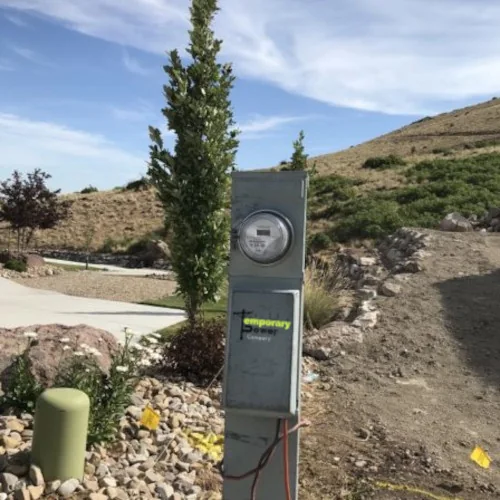
For Salt Lake City projects, TCS sets up the temporary power pole or pedestal and distribution and prepares it for inspection. Rocky Mountain Power makes the final live connection for most addresses in the city.
Salt Lake City site conditions
What shapes temporary power in Salt Lake City
Tight urban lots
Many sites have little room between the building footprint and the property line. The power pole or pedestal and any fence gates are placed where they will not block the sidewalk, crane swing, or delivery lane.
Right-of-way and frontage
Fencing next to public sidewalks or streets may need city approval. Confirm right-of-way requirements early so the perimeter plan does not change after install.
Phased commercial work
Mid-rise and mixed-use projects often move through several site layouts. Plan how temporary power distribution and fence lines will shift as the building rises.
Salt Lake City workflow spotlight
Residential and commercial temporary power coordination
How we plan and deliver temporary power for Salt Lake City jobsites — the conditions we work around, how we coordinate the work, and the local ground we cover.
Site challenge
Salt Lake City projects require an address-specific review of access, jurisdiction, serving utility, ground conditions, and construction phase.
Coordinated approach
TCS plans and prepares the temporary service for inspection; the confirmed serving utility performs the final live connection.
Service-area proof
The serving utility and local inspection path are confirmed for the Salt Lake City project address before scheduling.
Salt Lake City planning questions
Temporary power questions for Salt Lake City projects
Permitting, utility coordination, site conditions, and timing answered for this area. Requirements are always confirmed for the specific address.
What permits and inspections apply to temporary power in Salt Lake City?
Temporary service work in Salt Lake City is reviewed through Salt Lake City building and permitting divisions, with Salt Lake County jurisdiction on nearby unincorporated parcels. A temporary electrical or site permit is commonly required, and the pedestal and panel must pass inspection before the serving utility will connect it. Requirements and inspection steps must be confirmed for the specific address, since they differ between jurisdictions and can change.
Which utility connects temporary power in Salt Lake City, and what does TCS handle?
Rocky Mountain Power serves most Salt Lake City addresses, though a neighboring parcel can fall under a different municipal provider. The split is firm: TCS plans, builds, installs, and prepares the temporary service pedestal and panel for inspection, and the serving power utility performs the final hookup to live power. Utility scheduling is outside TCS control, so it is worth starting the request early.
What site conditions affect temporary power in Salt Lake City?
Salt Lake City sites commonly involve urban infill lots with tight property lines, existing utilities in the ground, and limited room between the building line and the sidewalk. On top of that, street access, lane or sidewalk impacts, and staging space are usually the first constraints to resolve. Sharing site plans, photos, or a short description of the approach lets the team plan around those conditions instead of discovering them on the first visit.
How long does it take to get temporary power arranged in Salt Lake City?
After project details arrive, TCS reviews the site information, confirms scope, and schedules installation and inspection readiness around the construction phase. The final live connection depends on the serving utility's own scheduling and on inspection sign-off, so realistic timing is confirmed for your project rather than promised in advance. Early requests give the most schedule flexibility.
Do you set up temporary power poles in Salt Lake City?
Yes. TCS sets up temporary power poles and pedestals for construction sites in Salt Lake City, including the panel and distribution the crews need, and prepares the setup for inspection. Once it passes inspection, the serving electric utility makes the final connection to live power.
Keep the site plan together
Related site services in Salt Lake City
Power is usually the first service in and the last one out. While we set the Salt Lake City pedestal and distribution, the same crew can fence the perimeter, light the work areas, and keep generators fueled — one dispatch, one schedule.
Local trust signals
Working alongside Salt Lake City builders and inspectors
TCS coordinates with the parties who decide what a site needs, and keeps documentation available for the contractors and superintendents running the job.
Licensed, insured, safety aware
Licensing and insurance documentation is available on request, and crews work to the safety requirements in place on the site.
Builder relationships named by TCS
TCS identifies work supporting D.r. horton, Lennar, Ivory homes, Visionary, Kier, Stout, Zadok, Wright development.
Local service-area proof
The serving utility and local inspection path are confirmed for the Salt Lake City project address before scheduling.
Temporary power in Salt Lake City
What superintendents need before the pedestal goes in
Share the lot or parcel, the serving utility, and the planned pedestal location. TCS sets and prepares the temporary power pole or pedestal for inspection, then the utility makes the final live connection on its schedule.
What the field team documents
Site access, approved scope, inspection readiness, gate placement, phase changes, and the handoff to the serving utility or site superintendent are tied to the actual project rather than presented as anonymous claims.
Plan the next move
Let’s get your site ready.
Share the project type, Utah location, timing, and services you are considering. Our team will review the details and follow up.